Havana: Difference between revisions
| Line 14: | Line 14: | ||
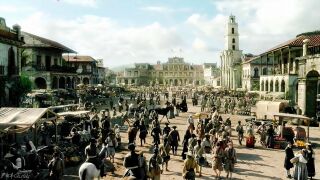
Havana is one of the oldest cities in Cuba and the Caribbean altogether. The last stop for the Spanish treasure fleet before setting sail for Spain, Havana enjoys strong military protection, and its merchants a solid trade with Europe as any ships sail northeast with the treasure fleet. | Havana is one of the oldest cities in Cuba and the Caribbean altogether. The last stop for the Spanish treasure fleet before setting sail for Spain, Havana enjoys strong military protection, and its merchants a solid trade with Europe as any ships sail northeast with the treasure fleet. | ||
=Locations= | =Locations= | ||
<p>Within Havana's city walls are its five large plazas, each with its own architectural character: ''Plaza de Armas, Plaza Vieja, Plaza de San Francisco, Plaza del Cristo and Plaza de la Catedral.'' Around these plazas are many outstanding buildings, including the Iglesia Catedral de La Habana, Antiguo Convento de San Francisco de Asís, Palacio del Segundo Cabo and Palacio de los Capitanes Generales. Interspersed with this mix of baroque and neoclassical style monuments is a homogeneous ensemble of private houses with arcades, balconies, wrought-iron gates and internal courtyards.</p> | |||
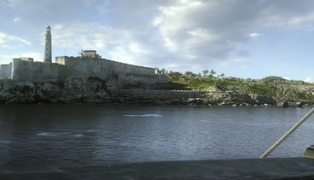
<p>The complex system of fortifications that protects Havana, its port and its dockyard, is comprised of the ''Fortaleza de San Carlos de la Cabaña'' –one of the largest colonial fortresses in the Americas– on the east side of the narrow entrance canal to Havana Bay; ''Castillo de la Real Fuerza'' –one of the oldest colonial fortresses in the Americas (begun in 1558)– on the west side of the canal; and ''Castillo de San Salvador de la Punta'' and ''Castillo de los Tres Reyes del Morro'' guarding the entrance to the canal; as well as the ''Torreón de San Lázaro, Castillo de Santa Dorotea de Luna de la Chorrera, Reducto de Cojímar, Baluarte del Ángel, Lienzo de la Muralla y Puerta de la Tenaza, Restos de Lienzo de la Muralla, Garita de la Maestranza, Cuerpo de Guardia de la Puerta Nueva, Restos del Baluarte de Paula, Polvorín de San Antonio, Hornabeque de San Diego, Fuerte No. 4, Castillo de Santo Domingo de Atarés, Castillo del Príncipe and Fuerte No. 1.'' | |||
=Timeline= | =Timeline= | ||
Revision as of 22:27, 30 November 2022

| ||||||||||||
| Havana, Cuba | ||||||||||||
  | ||||||||||||

|

See Wikipedia
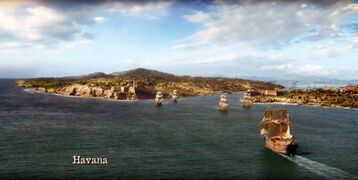
Havana is one of the oldest cities in Cuba and the Caribbean altogether. The last stop for the Spanish treasure fleet before setting sail for Spain, Havana enjoys strong military protection, and its merchants a solid trade with Europe as any ships sail northeast with the treasure fleet.
Locations
Within Havana's city walls are its five large plazas, each with its own architectural character: Plaza de Armas, Plaza Vieja, Plaza de San Francisco, Plaza del Cristo and Plaza de la Catedral. Around these plazas are many outstanding buildings, including the Iglesia Catedral de La Habana, Antiguo Convento de San Francisco de Asís, Palacio del Segundo Cabo and Palacio de los Capitanes Generales. Interspersed with this mix of baroque and neoclassical style monuments is a homogeneous ensemble of private houses with arcades, balconies, wrought-iron gates and internal courtyards.
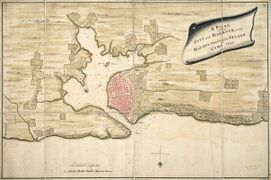
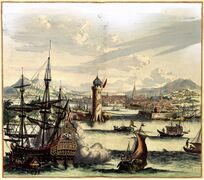
The complex system of fortifications that protects Havana, its port and its dockyard, is comprised of the Fortaleza de San Carlos de la Cabaña –one of the largest colonial fortresses in the Americas– on the east side of the narrow entrance canal to Havana Bay; Castillo de la Real Fuerza –one of the oldest colonial fortresses in the Americas (begun in 1558)– on the west side of the canal; and Castillo de San Salvador de la Punta and Castillo de los Tres Reyes del Morro guarding the entrance to the canal; as well as the Torreón de San Lázaro, Castillo de Santa Dorotea de Luna de la Chorrera, Reducto de Cojímar, Baluarte del Ángel, Lienzo de la Muralla y Puerta de la Tenaza, Restos de Lienzo de la Muralla, Garita de la Maestranza, Cuerpo de Guardia de la Puerta Nueva, Restos del Baluarte de Paula, Polvorín de San Antonio, Hornabeque de San Diego, Fuerte No. 4, Castillo de Santo Domingo de Atarés, Castillo del Príncipe and Fuerte No. 1.
Timeline
Gallery
-
 Harbour Chart
 -
-
-
-