Eleuthera

| ||||||||||||
| Eleuthera, Bahamas | ||||||||||||
  | ||||||||||||

|

See Wikipedia
A remote settlement often mistaken for or overlooked due to the nearby haven of Nassau, this out-of-the-way island colony is relatively unknown by both pirates and the navy alike, and the few who use it as a base prefer to keep it that way.
The N and largest of the islands on the E side of Great Bahama Bank, it has its low-lying extreme N portion divided from the rolling hills constituting its major and considerably-elongated S portion by Glass Window, a large square notch which, interrupting a precipitous terrain in the narrowest part of the island, is particularly conspicuous from the E and W.
The soil is fertile in several areas and supports agricultural and livestock activity. The E or windward side is largely reef-fringed, while the central portion of the W or leeward side is abrupt and fronted close up by a comparatively deep-water lagoon which may be entered by small vessels with local knowledge from either Northeast Providence Channel or by way of an intricate passage close W of Powell Point, the N extremity of the SW side of the island.
A current, with a strong SE set, may sometimes run close off Eleuthera Island NE side, particularly after N to NW winds, and thus counter to the prevalent NW set of the current farther offshore.
Locations
Harbour Island
See Wikipedia
In the mid-17th century, British puritans in search of religious freedom, known as the Eleutheran Adventurers, settled on Eleuthera across the water, then on Harbour Island. These settlers established an independent government and settlement that lasted for nearly 70 years, from when the puritans landed in 1650 to when Harbour Island surrendered its rights to the British Crown in 1717. Life was harsh in those years, and wrecking became an important source of income. Residents of Harbour Island had licenses to assist wrecked ships in return for a third of the recovered goods. Legend has it the wreckers promoted their business by luring ships onto reefs. But some historians counter that the locals were just as likely to prioritize saving lives over saving the loot.
- Home of Thomas Friendly
Features
The Devil's Backbone
A long reef off the north of the island. English ships are instructed to avoid it and sail around to the south. All other vessels, however, are left to their fate, their floating cargo to be claimed later by right of salvage. The more ruthless officials (and pirates) often hang lanterns on donkeys and walk them along the reef at night in order to simulate ships, thereby drawing unwary (and thus enemy) vessels to their doom here.
Hatchet Bay Caves
These mazes of tunnels are the ancient hiding place of the Arawak indians, where they took refuge from slavers. Listening to legends, pirates often hide here as well. The centuries have left a riddling network of native warnings, curses and treasures mixed with pirate codes and caches, and booby-traps left by both. Those who dare the caves, even if they've been inside before, take the chance of making one wrong turn into a previously unexplored area that will claim their life and add to the reputation of this "gateway to Hell."
Preacher's Cave
Found only a few miles from the main harbour, people often come here to hide, both outlaws of government and those most involved in government—spies—alike. Yet with the proliferation of privateering, the outlaw and agent have become nigh inseparable, leaving all previous names for these caves forgotten in favor of the priests running the town who deny guards to come here, and even go so far as to divert the Royal Navy from it, giving the pirate hunters false information to give the cave as wide a berth as possible. Yet there is another good reason why the priests steer the law away from it, and that is due to the gratitude of so many pirates, the church of Eleuthera has a great deal of money to hide, and they hide it deep within the tunnels.
A shallow harbour
Given the shallow depth of the main harbour, no ship larger than [Value 3] can enter it, and as the water remains shallow for miles out to sea, no ship larger than [Value 5] can approach within 10 miles of town.
Timeline
12 Feb 1725:
- Arrived in afternoon
- John Hayden spoke with Thomas Friendly regarding his son's whereabouts
- Dora captured by a bounty-hunter.
Gallery
-
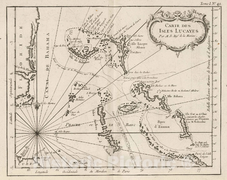 Map of the Bahamas
 -
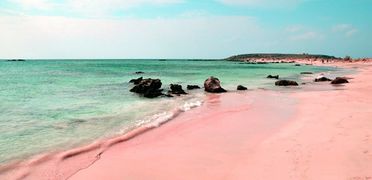 Harbour Island beach
 -
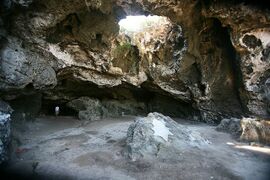 Preacher's Cave


